We send you here
Market, then farm
Six dishes, a farm walk
- Start price$30
- Length of classRuns 5.5 to 8 hours
- GroupMax 14 cooks
- Rated4.9 from 2,005
Sum for your cooks
Farm cooking class with a market tour and six dishes
★ 5.0 · 2,005 guest reviews
Bite-sized answer
An Ubud cooking class runs from a one-hour dessert lesson to a day listed at 5.5 to 8 hours, and our farm class starts from $30.
Settle these first
Line up 4 classes
Enter how many are cooking and compare the from-prices side by side.
≈
View≈
View≈
View≈
ViewLowest GetYourGuide prices, converted at the ECB rate; the final total appears at checkout.
Classes near Ubud range from a one-hour dessert lesson to a market, farm and six-dish day. This guide sets their lengths, group sizes and from-prices side by side, then says which one we send you to.
Editorial team, balinesecookingclass.com · Updated November 3, 2026 · Roughly 6 min of reading
Start with these lines
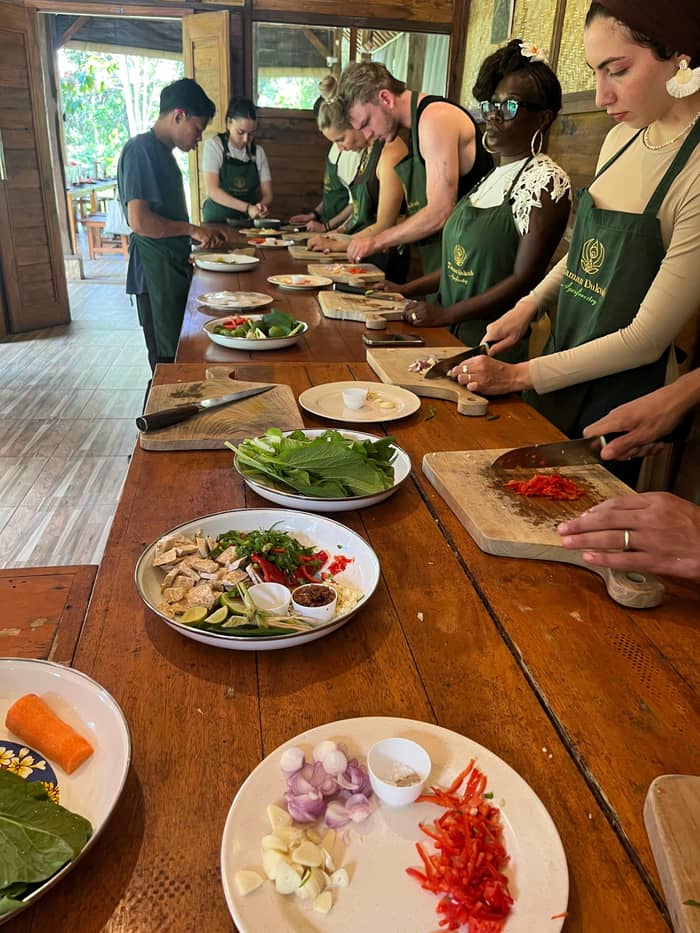
Our recommended class is a Balinese cooking class in Ubud, held at an organic farm, and it is a full outing rather than a lesson. It starts with a tour of a local market, continues with a welcome coffee or tea and a light breakfast at the farm, and then walks you through the farm to pick vegetables before the chef takes over.
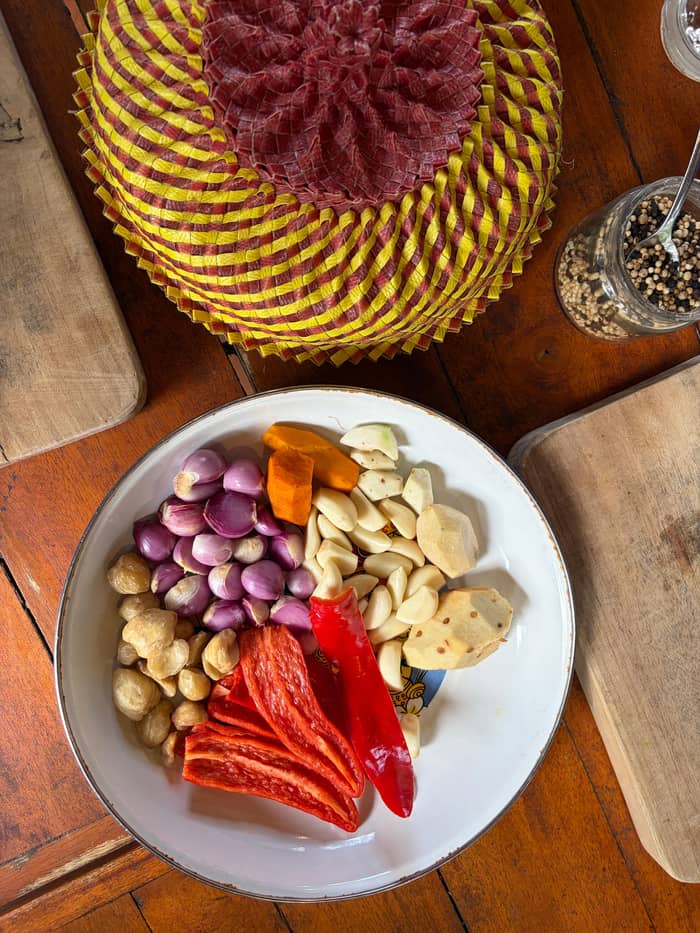
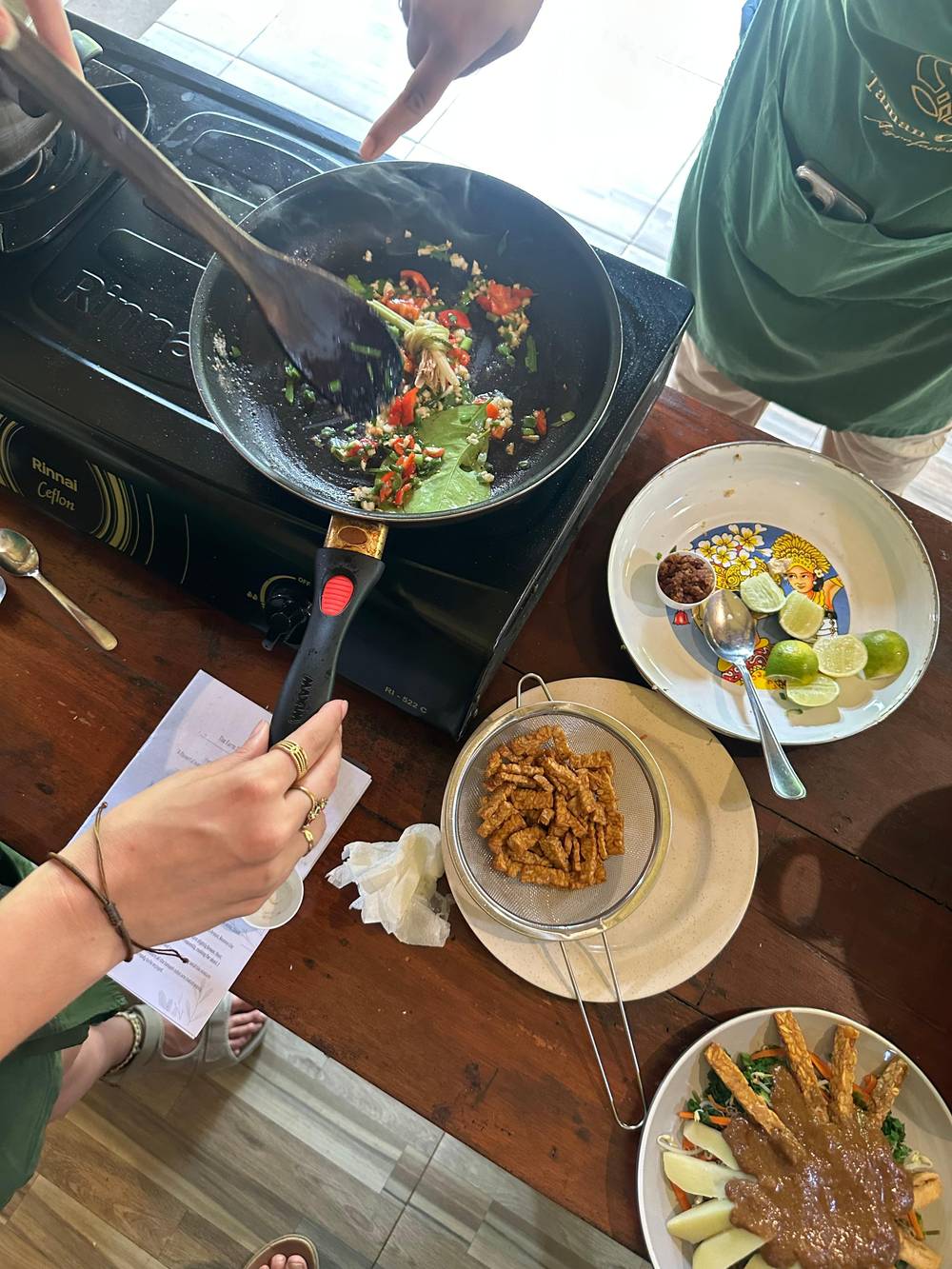
You cook 6 Balinese dishes and choose a regular or a vegetarian menu before the class begins. The regular menu includes a spice paste called base gede, a salad of greens with coconut, a chicken curry, sate lilit and a sweet and sour tempe, with banana fritters or black rice pudding for dessert. The vegetarian menu keeps the paste and the tempe and swaps the meat dishes for a vegetable and peanut sauce plate, a tempe curry and a vegan sate lilit made with jackfruit.
Then you eat what you cooked, and the recipe book comes home with you. Listed duration runs 5.5 to 8 hours by option, so treat it as a day with a late lunch rather than a morning errand.
Classes in one grid
| Class | Start price | Length of class | Cooks per group |
|---|---|---|---|
| Farm class | $30 | Runs 5.5 to 8 hours | Max 14 cooks |
| Village class | $35 | Runs 3.5 to 4 hours | Max 15 cooks |
| Transfer class | $20 | Runs 2 to 3 hours | Max 10 cooks |
| Rice field class | $18 | Runs 3.5 to 5 hours | Max 10 cooks |
| All-inclusive class | $23 | Runs 5 hours | Silent on this |
Prices are from-prices; times and group sizes as each listing states them.
Length is the biggest difference between the classes around Ubud. The listing that offers transfers and an optional market visit is listed at 2 to 3 hours, the village class at 3.5 to 4 hours, the rice field and market class at 3.5 to 5 hours, and the all-inclusive class at 5 hours.
At the long end sits our farm class at 5.5 to 8 hours. At the short end is a dessert class where a session lasts 1 to 1.5 hours and you make five traditional Balinese cakes, no cooking experience needed.
Read these as ranges by booking option and check the start times on the booking page. A longer class is not automatically a better one, but a market tour, a farm or a rice field walk takes up the hours that a plain kitchen lesson does not. Our farm class opens with a market stop and a farm walk before any knife is lifted, so allow for the whole day when you plan flights or transfers around it, and leave the evening free of a tight dinner reservation.
How long each class runs
The longest duration each listing shows by option; shorter options exist.
The tourism ministry calls Ubud compact but hilly, with walking, hired bicycles and hired motorbikes as the ways to get about.2 Some classes sit a little outside the centre. Indonesia Travel lists a school at Jalan Raya Laplapan, Petulu, Ubud, and that school's own website puts classes in a family home near Ubud, in Laplapan village.3,4
Our listing is on an organic farm, and the harvest walk is part of the class. Another class runs in the village of Laplapan with a market visit first, a third passes through rice fields and explains the subak water system, and a fourth makes a covered, open-air kitchen of a local home.
The setting changes what you learn. A farm gives you vegetables in the ground, a compound gives you a family kitchen and a rice field walk gives you the water that grows the rice. Pick the setting you would like to see before you pick the price.
Match the class to your day
Choose the line closest to your plans and read the answer beside it.
If I want the full day
The farm morning
Listed at 5.5 to 8 hours with a market tour, a farm walk and 6 dishes.
If I have a morning only
The transfer class
Listed at 2 to 3 hours with optional market and transfers.
If I want rice fields too
The rice field class
It adds a rice field walk and an explanation of subak irrigation.
If I only want sweets
The dessert class
Five Balinese cakes in 1 to 1.5 hours.
If I need a vegetarian menu
Any of these, said at booking
The farm class asks for the menu choice before the class.
If If I want a private group of my own
The one-party class
A private group in a family home, listed at 6 hours.
Three ways to spend the morning
We send you here
Six dishes, a farm walk
Mid length
Market, then Laplapan
Short
Optional market stop
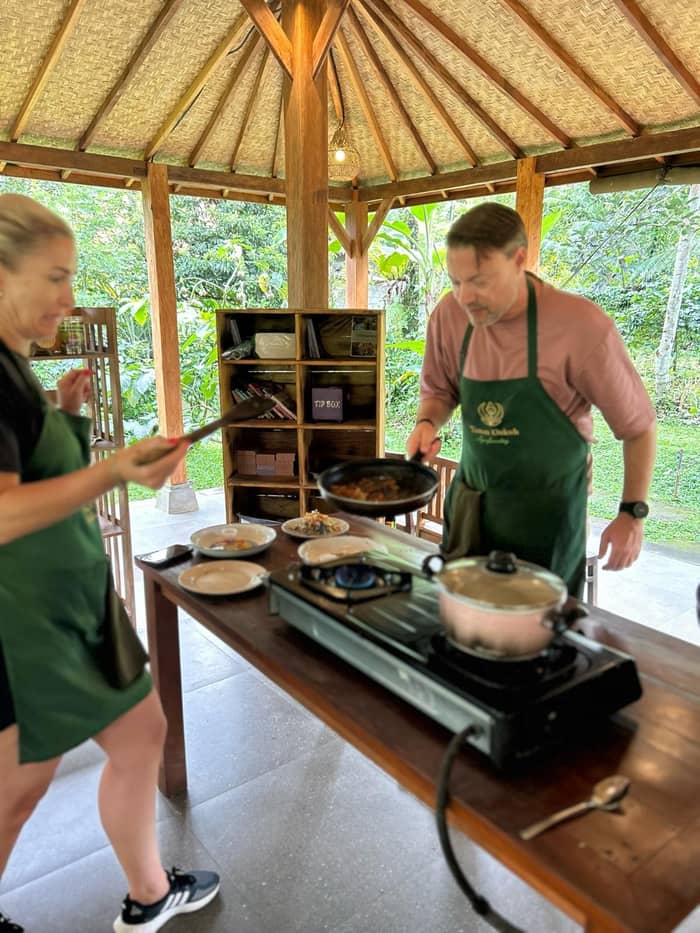
On our farm class the group is small, at most 14 people, and a session at the farm may run alongside 2 or 3 groups. Each cooking station is shared between 2 people. Plan on sharing a stove with a partner, and on a farm that can hold more than one group at the same time.
Other Ubud classes set tighter limits. The transfer class caps its small group at 10, the rice field class also lists up to 10, and the village class allows up to 15. A class in the Sidemen hills lists up to 6.
If you want your own group, a private class in a family home is listed too, with a private group and a 6 hour length. A private booking removes the question of other groups, and the booking page is where you confirm what a given date really holds. Check the guide's language too: the farm class lists English and Indonesian.
One farm class, in order
The opening stop
The class opens with a tour of a local market where you see the ingredients.
Out at the farm
A welcome coffee or tea and a light breakfast greet you.
In the beds
A walk through the farm to collect what the dishes will need.
At the stove
You cook 6 Balinese dishes, sharing a station with a partner.
When the plates arrive
You eat the meal and keep the recipe book.
Our farm class starts from $30 per person, the village class from $35, the transfer class from $20 and the rice field class from $18. Each figure is the lowest price GetYourGuide shows for that listing and not a quote for your date.
Read the small print for the extras. The transfer class lists a surcharge of 50,000 rupiah per person for the Sebali or Keliki area, as the listing states it. On the village class, pickup from places outside Ubud is an add-on you request when booking.
Your own costs sit outside the booking. Visitors from abroad owe Bali's Rp 150,000 levy, one payment per person for the stay, cashless, through Love Bali online or at the payment desks in the airport and port.5,6 It is not part of any class price. Prices on this page are start prices converted into your currency at a reference rate and rounded, and the exact total appears at checkout. Market snacks, drinks and anything you buy along the way are yours to pay.
Video
DISKOVERA on YouTube · The video waits until you press play.
Begin your cooking class at a local market as you learn about the herbs, spices, fruits, and vegetables
Before the class
The time of day changes the class. The village class keeps its afternoon session shorter by dropping the market tour, and the rice field class has no afternoon market visit because the market has already closed. One school's own site offers mornings from 08.30 AM and afternoons from 03.30 PM.7
In Indonesia Travel's account the dry months are April to October and the wet months November to March, though the seasons now shift more than they did.8,9 In Denpasar the Japan Meteorological Agency normals show 27.6 mm of rain in July and 350.7 mm in January.10,11 Denpasar is on the south coast, so read those as a guide to the island and not as Ubud's own figures.
A covered kitchen keeps rain off the cutting board: the dessert class runs in a covered, open-air kitchen and operates in all weather, and our farm class does not state a weather rule, so ask. On Nyepi, in March or April, all shops and markets close for the day of silence, and no class can start that morning.12,13
Our farm class gives a full refund if you cancel at least 24 hours ahead, and you may reserve first and pay afterwards. The same free cancellation applies to the transfer, village and rice field classes in this guide.
Choose your menu when you book: the farm class asks you to pick regular or vegetarian before the class. A private class in a family home adds that some dishes may contain peanuts, soy or animal products, and asks you to tell the team about dietary needs or allergies in advance.
Two questions are worth a message. The listing as we hold it shows no pickup line for the farm class, so ask whether a transfer is possible from your hotel. And if you are travelling with children, ask for the age rule, since our records state none for this class. A class that lists a wheelchair-accessible venue, such as the Sidemen family class, says so on its page, and ours does not, so ask about steps and walking distance if mobility matters.
FAQ
A dessert session lasts 1 to 1.5 hours and our farm class is listed at 5.5 to 8 hours; most others sit between 2 and 5 hours.
The transfer class begins at $20 and the village class at $35; every figure is a from-price.
Afternoon sessions on the village and rice field classes drop it, and the transfer class makes it optional.
Each cooking station is shared between 2 people and there may be 2 or 3 groups at the farm in one session.
The farm class offers a regular and a vegetarian menu and asks for the choice before the class.
The farm class lists a recipe book to keep, and the village class says recipes and notes are yours to keep.
Cancel at least 24 hours before and the refund is full; payment can wait until after you reserve.
Sources
Keep reading
Questions about the market, the menu or the farm? A person answers here.